DLVRD
Video Delivery Platform for Filmmakers
We took DLVRD from a Figma Make export to a live video delivery platform for filmmakers in six months: resumable uploads up to 200 GB per file, our own FFmpeg video pipeline, a gallery editor for branded client galleries, client upload links, cold storage, Stripe billing and an admin console.
From a Figma Make export to a live video delivery platform
DLVRD is a video delivery platform and client gallery engine for filmmakers, videographers and production agencies. The pitch is simple: stop sending clients a Dropbox link and a file called FINAL_v7_2.mp4, and send them a branded gallery they can open on their phone.
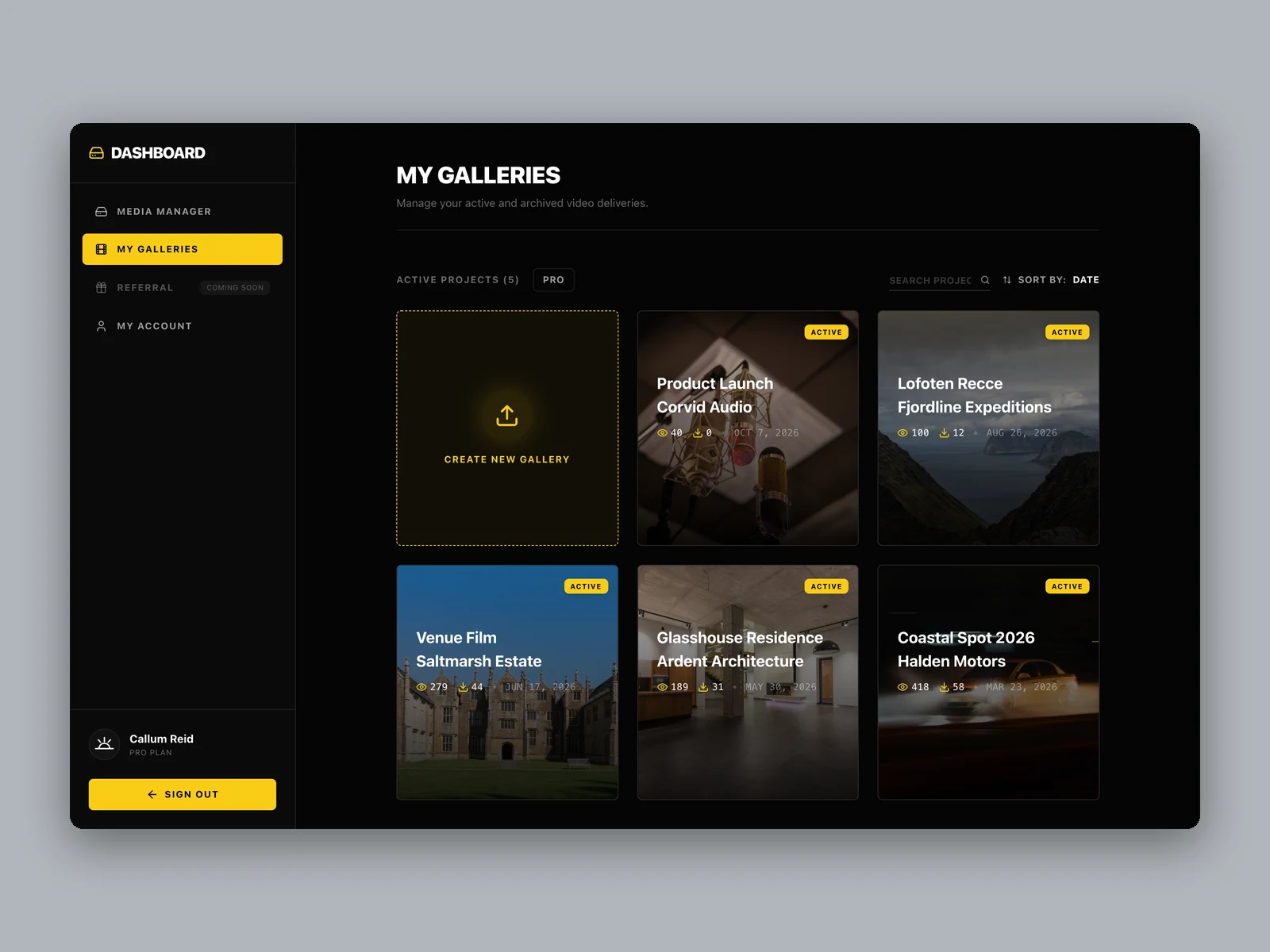
DLVRD came to us in February as a Figma Make design export. Over the next six months we designed and built it into a production SaaS: a React app for creators and their clients, an Express and PostgreSQL API with around 160 endpoints, a fleet of background workers for video, Stripe billing, an admin console and the infrastructure to run it. It went to production in August, took its first paying customer on launch day, and now has 1,000+ users. We are still shipping releases for it.
Uploads built for multi-gigabyte masters
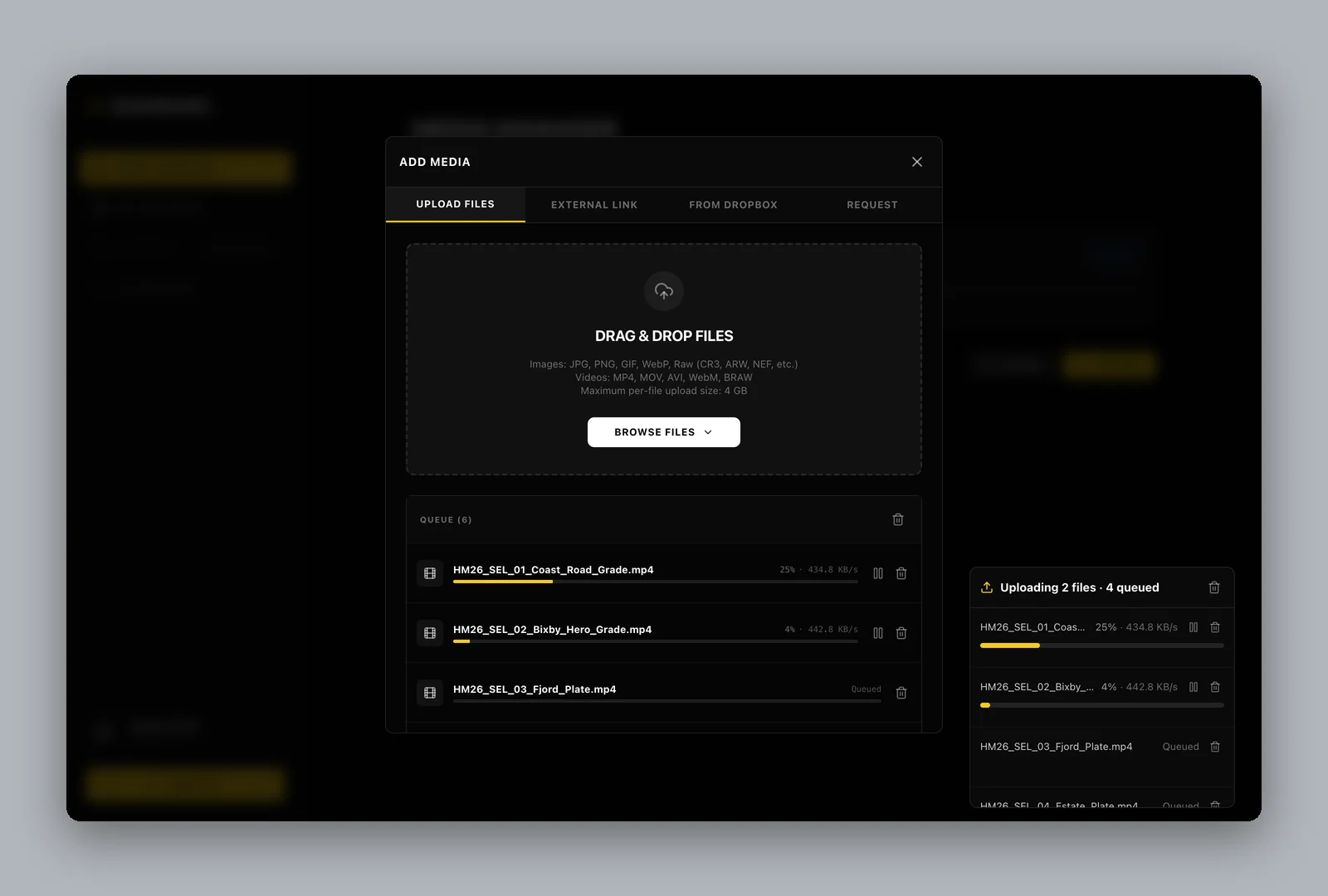
Filmmakers move enormous files, so uploads had to survive real conditions. We rebuilt the upload engine around parallel chunks that resume after a dropped connection or a server restart, with a global queue that keeps running while you move around the app. We benchmarked against Dropbox, Frame.io and WeTransfer and raised the per-file limit for creators from 1 GB to 200 GB. Storage quotas are checked before and during an upload, including bytes still in flight, and creators can pull files straight in from Dropbox.
When a creator dropped a roughly 100 GB folder and the browser buckled, we split the worker queues for thumbnails and compression and throttled status polling so large drops stay smooth.
A gallery editor instead of a shared folder
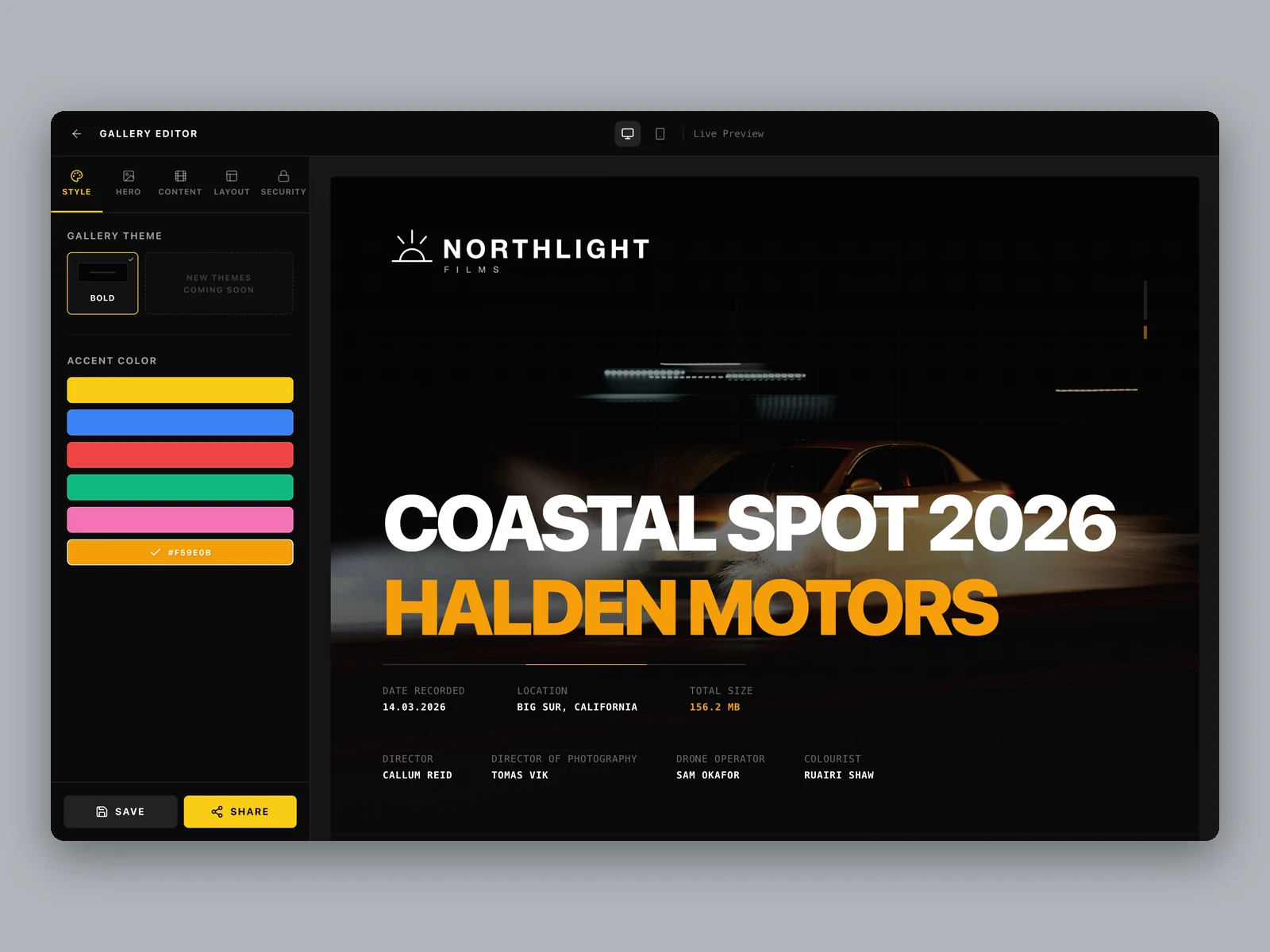
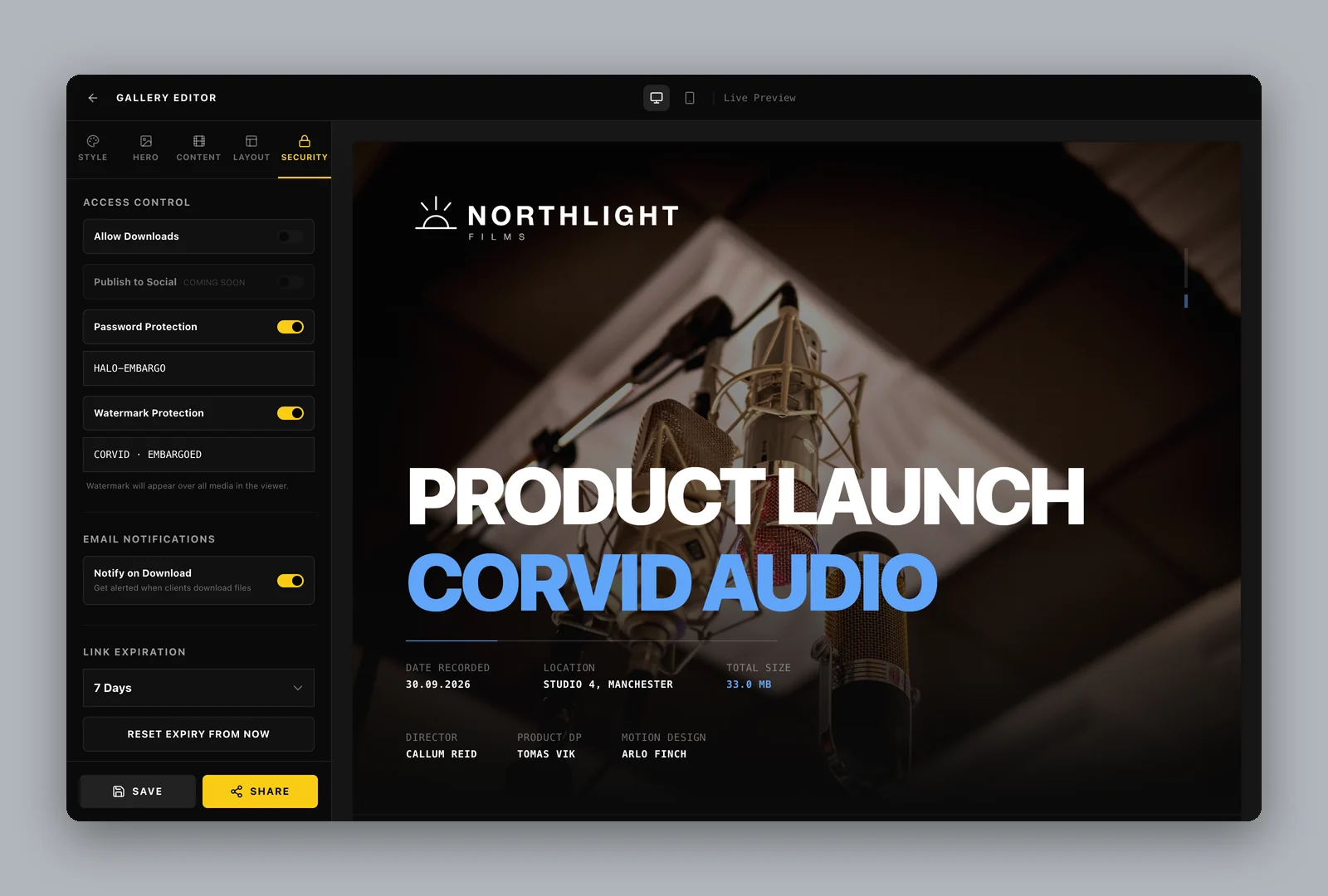
The gallery editor is the heart of the product. A creator sets the hero, project title and crew credits, picks a theme and accent colour, chooses a grid or list layout and orders the media, with a live desktop and mobile preview as they go. The security tab controls downloads, password protection, visible watermarks, download notifications and link expiry. Later releases added hero text and focal-point controls, client comments and folders inside galleries.
The gallery the client actually sees
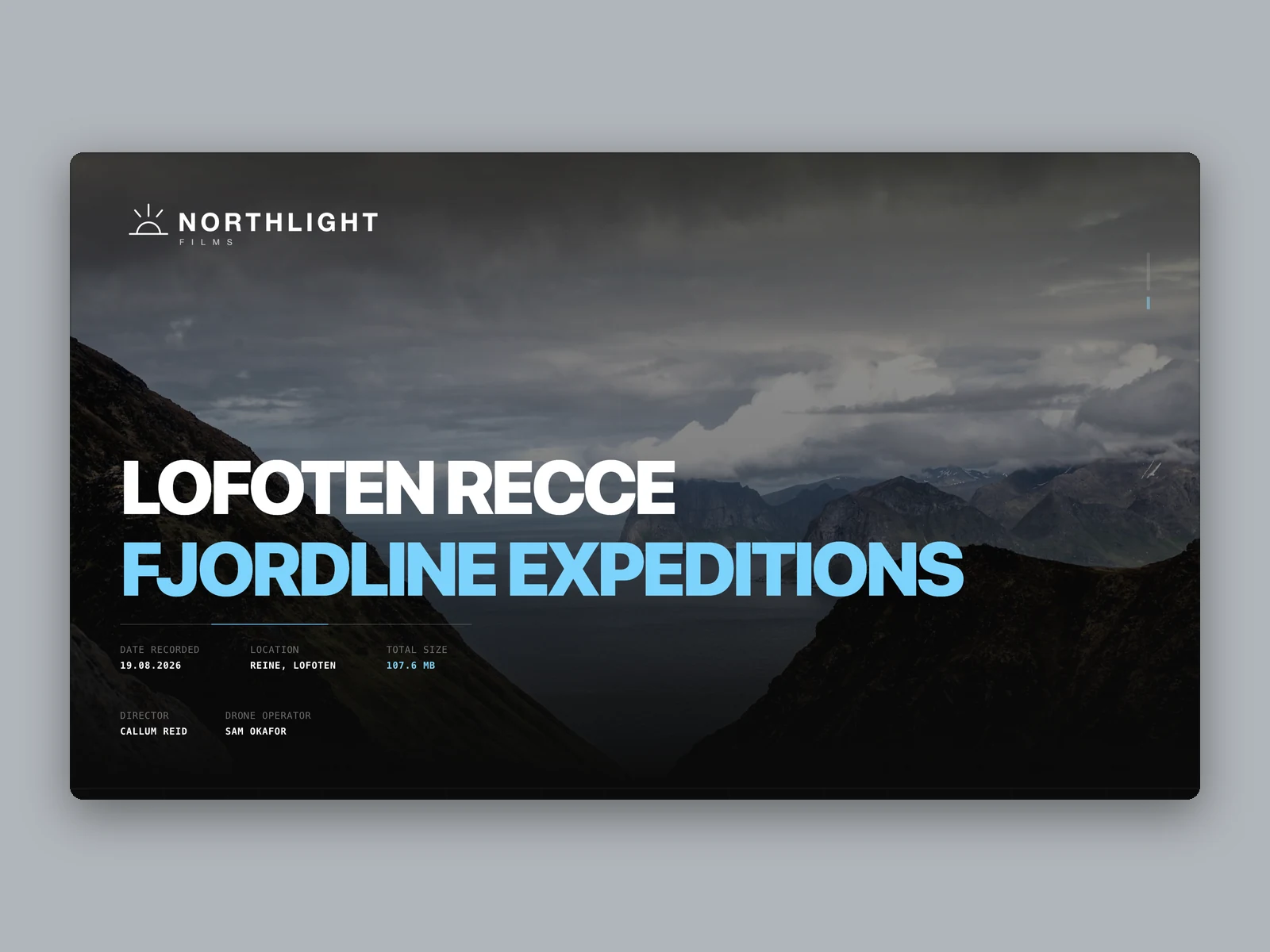
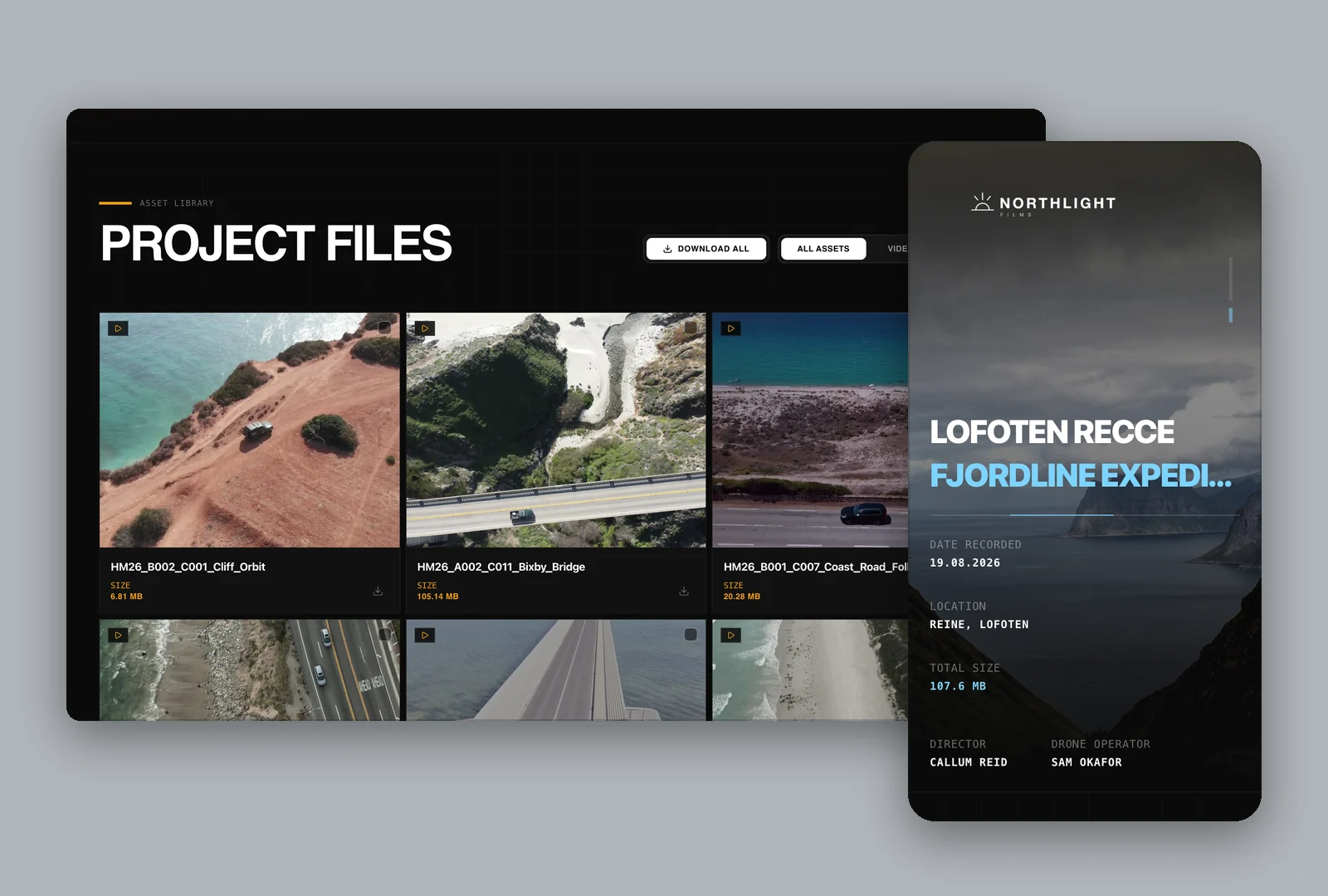
One link gives the client a cinematic, phone-ready gallery: no login, no ads, an optional branded password gate, streaming playback and full-resolution downloads when the creator allows them. Video and high-resolution photos sit together in one link, and whole galleries download as a single zip prepared in the background.
Client upload links
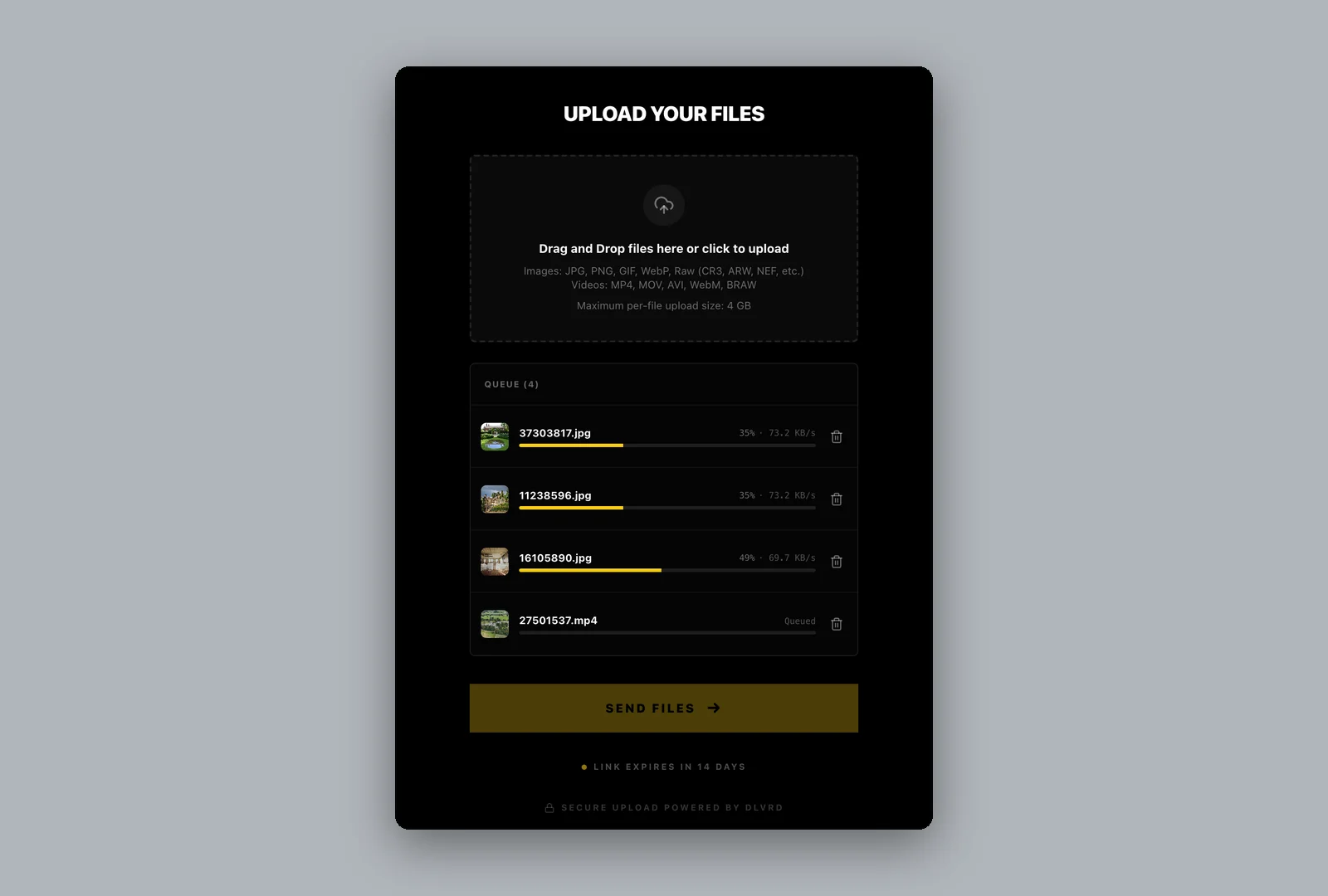
Delivery runs both ways. A creator can send a request link so a client uploads footage, selects or revisions straight into a chosen folder, with the same resumable uploads, an optional password and an expiry date. No more email chains or WeTransfer links.
Our own video pipeline
The original plan was AWS MediaConvert reading from Cloudflare R2. We showed early that MediaConvert cannot read from R2, so we built DLVRD its own pipeline: a fleet of FFmpeg workers that compress every video into 720p and 1080p streaming proxies while the original stays untouched for download. Thumbnails run on their own priority queue so galleries feel ready quickly. The pipeline handles RAW photo formats, including Blackmagic BRAW thumbnails, skips compression when it is not needed, recovers stuck jobs and keeps one heavy account from starving everyone else's queue. As usage grew, we scaled it across additional servers.
The Vault: cold storage for finished work
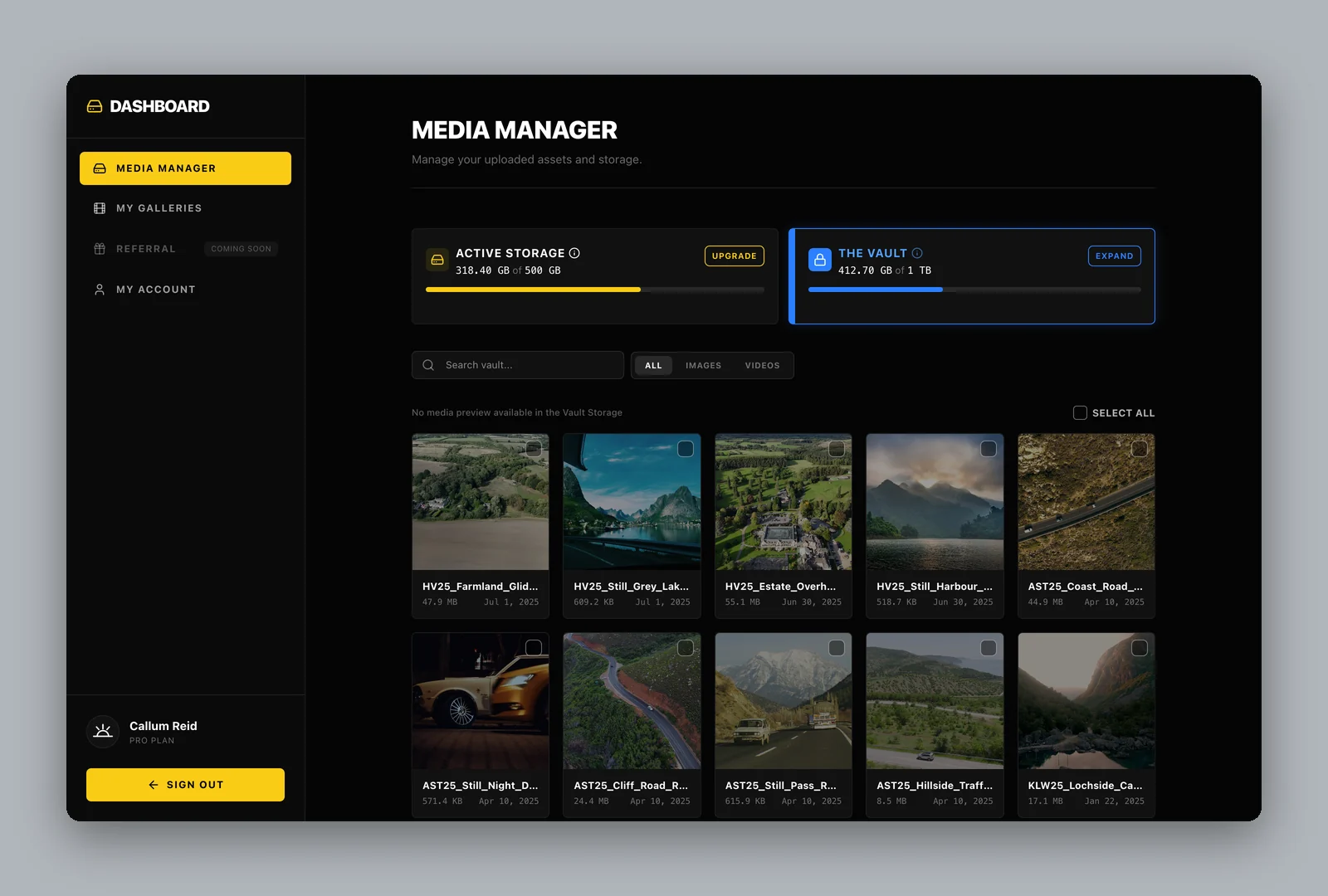
Finished projects should not sit on working storage forever. We compared cold storage options and built the Vault, a separate archive tier sold in 1 TB blocks, with background workers handling the move and the restore, its own quota and plan-gated access.
Billing and a partner program
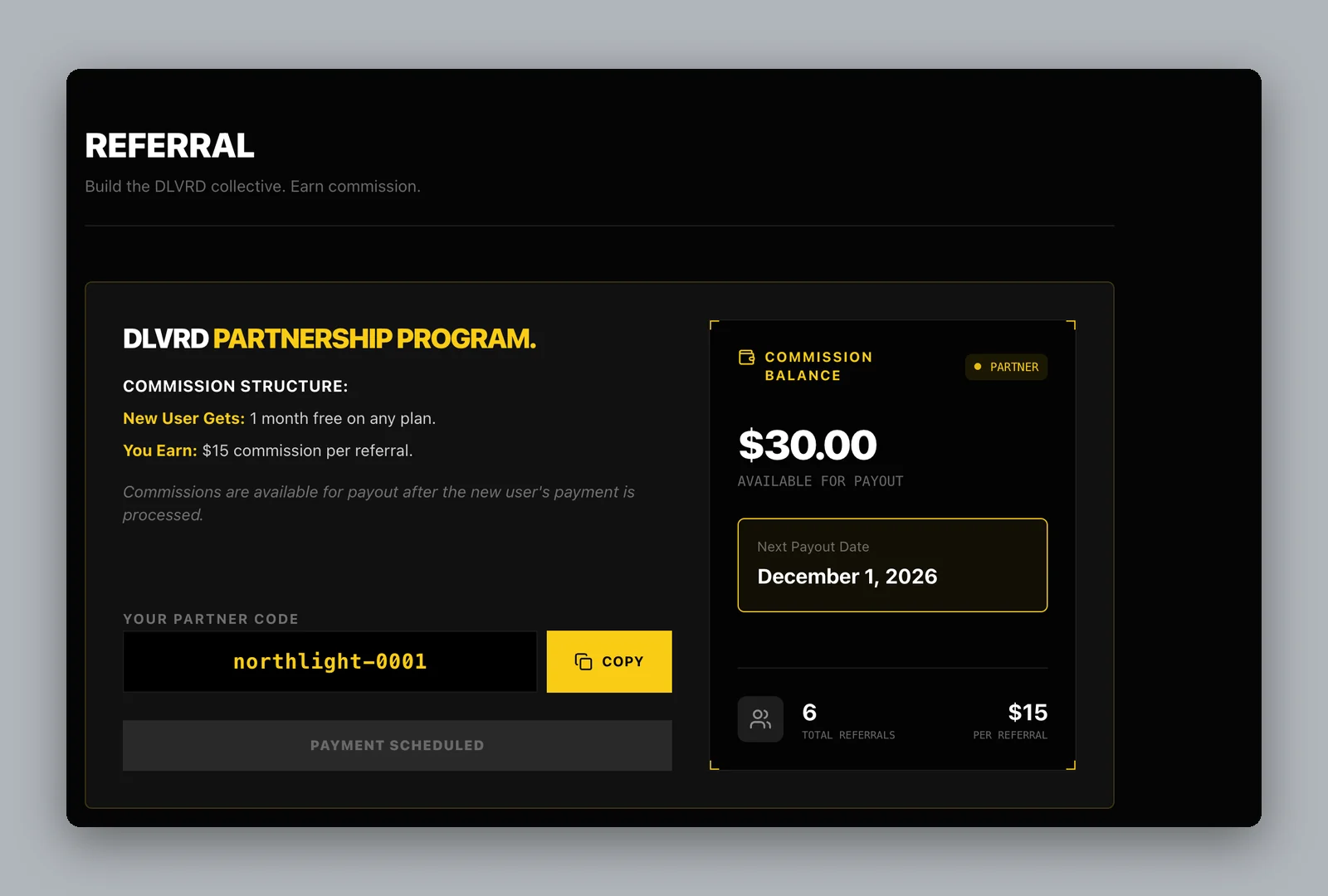
DLVRD sells on Stripe subscriptions, from a free Starter plan up to Studio, plus one-time Vault purchases, with features like the Vault, watermarks, password protection and white-label branding gated by plan. Billing state never relies on Stripe webhooks alone. To help it grow through creators, we built a partner program: each partner gets a referral code, new users get a free month, and partners earn a commission per referral, tracked from pending to paid out.
An admin console to run it
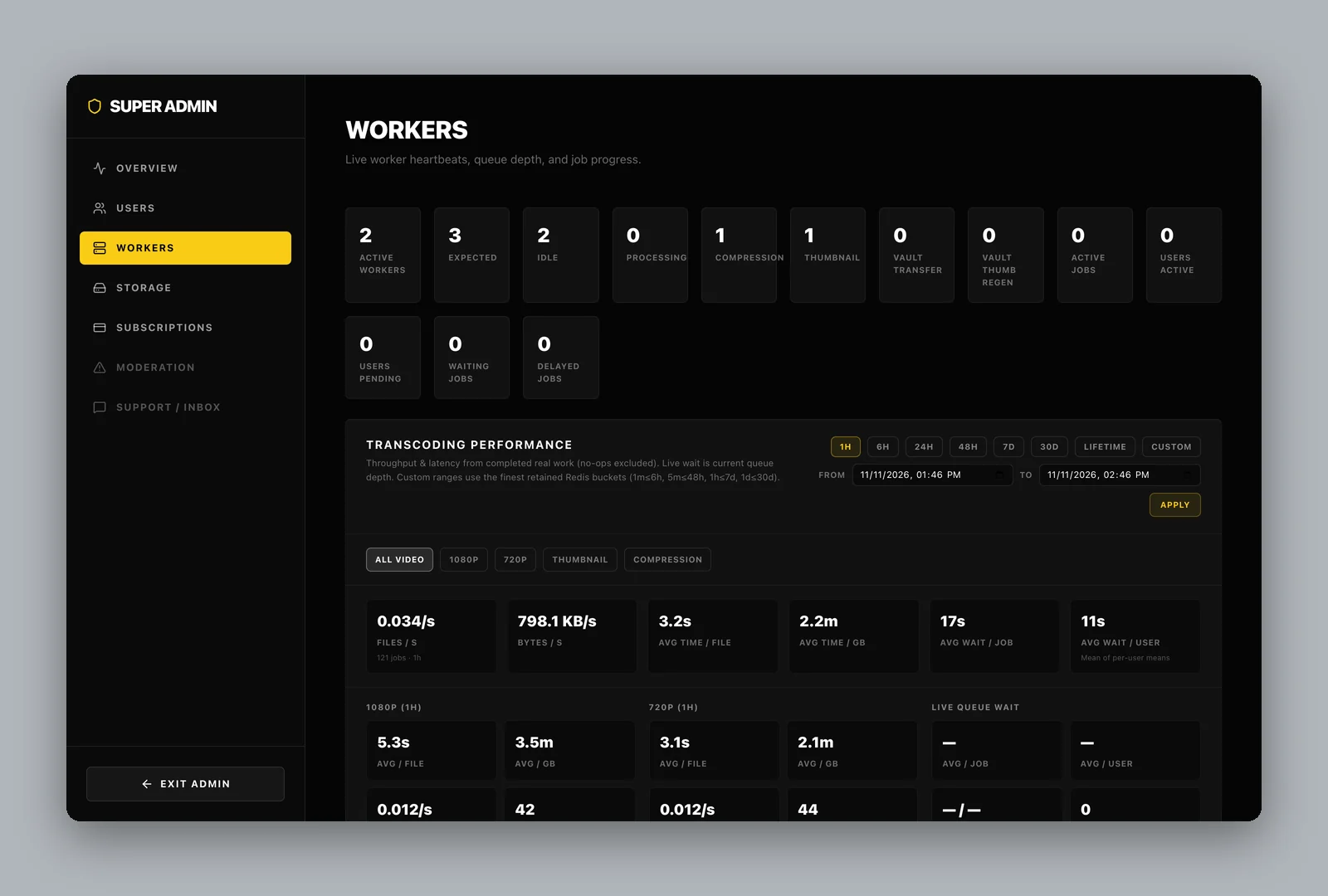
The internal console covers users, storage, subscriptions, bandwidth analytics and moderation, plus a live view of the worker fleet: transcoding throughput, queue depth and jobs waiting per file. When something gets stuck, the team can see where and why.
Infrastructure that scales with the business
We split production into an API stack and a worker stack and moved the API and transcoding onto fixed-price servers instead of usage-priced cloud compute, with media on Cloudflare R2 and zip downloads served through Cloudflare. After launch, storage on every plan went up at the same price: from 100 GB, 500 GB and 2 TB to 500 GB, 1 TB and 3 TB.
The result
DLVRD went from a Figma Make export to a live video delivery platform in six months, with its first paying customer on launch day and 1,000+ users today. It runs on resumable uploads, our own video pipeline, branded client galleries, client upload links, cold storage, Stripe billing, a partner program and an admin console, and we keep shipping for it.



Accepted Payments