Why SaaS Founders Choose Design Agencies Over In-House Hires (And When They Shouldn't)
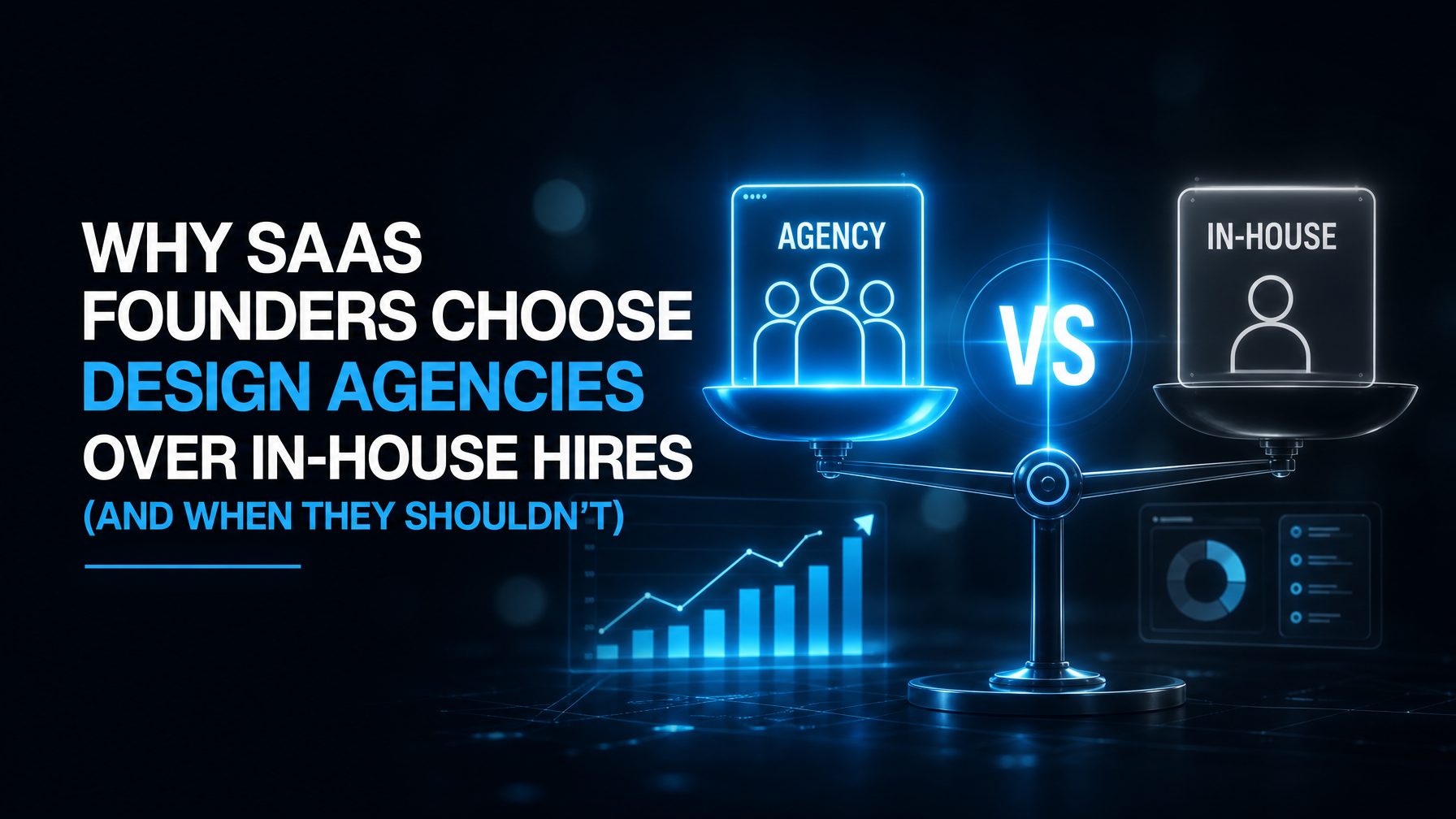
The In-House vs. Agency Trap
Every early-stage SaaS founder asks the same question: should I hire a designer or work with an agency? It feels like the practical choice should be simple—hire one person, pay one salary, keep IP internal. But the reality is messier. Most founders who go in-house in year one end up either paying 3–4x more than an agency would cost, hiring the wrong person, or missing the design feedback loop entirely. The Small Square has shipped enough products with founders to see both paths clearly—and when each one actually works.
The True Cost of an In-House Designer for a Pre-Product SaaS
A junior designer costs $60–80k. A mid-level designer runs $90–140k. Add benefits, payroll taxes, and tools (Figma, Adobe, design software licenses, monitoring tools), and you're at $95–160k all-in for year one. By month three, you own salary risk whether you have live revenue or not.
But the hidden cost is velocity. A single in-house designer becomes a bottleneck. They're designing dashboards, landing pages, pitch deck slides, and mobile flows simultaneously. They're also attending all your product meetings, weighing in on every decision, and becoming the single point of failure if they leave. In a pre-launch phase, that's eighteen months of product work compressed into one person's calendar. Product design agencies like The Small Square compress that timeline by running parallel workstreams—multiple designers, specialized expertise in SaaS conversion mechanics, and accountability for shipped work, not just hours logged.
An in-house hire is actually more expensive than an agency when you factor in time-to-market cost and the risk of hiring the wrong person.
When In-House Makes Real Sense
In-house design is the right call if:
- You have product-market fit and steady revenue. Once you're post-launch with paying customers, a dedicated designer moves faster on iteration because they own the product context and live in your Slack. There's no onboarding cost per project.
- You're shipping high-velocity features quarterly. If design is 40% of your engineering capacity and you're shipping every six weeks, an in-house person pays for themselves by eliminating hand-offs.
- Your product is simple enough for one designer to own. A single-surface tool (like a CLI dashboard or a settings panel) can be owned by one person. A SaaS platform with web, mobile, internal tools, and marketing sites cannot.
- You have proven design taste and can hire well. Founders who've worked with great designers before and know what to look for are more likely to succeed. First-time founders hiring design almost always get this wrong.
Why Agencies Win in the Pre-Launch Phase
The case for an agency is strongest before you ship:
Specialization in SaaS design mechanics. An in-house designer might be great at corporate branding or mobile apps. A SaaS-focused agency has shipped dashboard UX, role-based access patterns, onboarding flows, and conversion-optimized pricing pages. That muscle memory translates directly to products that convert faster.
The Small Square has designed for 10+ years shipping SaaS products—Mattermost (where Asaad was the first designer), Focalboard, real-time collaboration tools, B2B marketplaces, and AI platforms. That's not just portfolio depth; it's a mental model of what actually ships and sells. An in-house designer, even a strong one, needs 6–12 months to develop that intuition in your specific domain.
Velocity on multiple workstreams simultaneously. You need landing page design, SaaS dashboard design, mobile flows, and a pitch deck. An agency runs those in parallel. An in-house person does them sequentially. That compounds to 12+ weeks of delay.
Built-in feedback loops and second opinions. A good agency brings experience from adjacent products—what pattern worked for a fintech platform might solve your retention problem. An in-house designer is often working alone and defaulting to their own patterns, sometimes stale ones.
No hiring risk and no departure risk. If your in-house designer leaves or isn't the right fit, you've lost six months and have to start over. An agency brings continuity. If a designer rotates, the next one already knows your product because it's documented.
The Hybrid Model: Agency First, Then In-House
The smart founders are running a hybrid playbook: work with a product design agency to ship the MVP, nail the core UX, and prove the model. Once you're post-launch with data on what users actually do, then hire an in-house designer to iterate and refine. By then, you have:
- Revenue to justify the salary cost
- Clear design direction already proven in the market
- Specific design debt to own (which a hired designer can tackle instead of inventing new patterns)
- A documented design system the new hire can maintain and evolve
This approach costs less than a full in-house hire from day one, compresses launch timeline by 6+ months, and de-risks the designer hire because you have proven work to show candidates and clear expectations on what good design looks like in your context.
Red Flags for In-House Hiring in Early Stage
Do not hire in-house if:
- You haven't seen the designer's shipped SaaS work or only see freelance/template projects
- They're hired based on portfolio aesthetics rather than conversion mechanics or product strategy
- You're pre-revenue or more than 18 months from product-market fit
- Your product spans web, mobile, and internal tools (too much surface area for one person)
- You're in a niche (DevOps, SecOps, fintech) and the designer has no domain knowledge
When to Move to an Agency
Some founders make the opposite mistake: they hire in-house too early, get burnt, and then want to outsource. At that point, an agency can still help—but expect a 4–6 week onboarding phase and budget for some rework as the agency rebuilds context. It's faster than re-hiring, but it's not free.
If you're already in-house but your designer is overwhelmed, split the work: use a SaaS development services partner for greenfield features or platform redesigns while your in-house person handles iteration and tactical updates. This unblocks velocity without abandoning your hire.
The Real Question
The decision isn't really "agency vs. in-house." It's "what do I need to win right now, and what can I afford to risk?" Pre-launch, the answer is almost always outsource to speed. Post-launch with revenue, the answer is usually hire in-house to own the product. The founders who get this backwards—hiring in-house too early or staying with an agency too long—end up with slower products, higher costs, and more regret.
If you're building a SaaS product and unsure whether to hire or outsource, a good agency can help you audit where you actually stand and what the right move is. The Small Square offers free strategy calls to walk through exactly this decision. The cost of 30 minutes of clarity is nothing compared to the cost of hiring the wrong person or staying outsourced too long.



Accepted Payments

