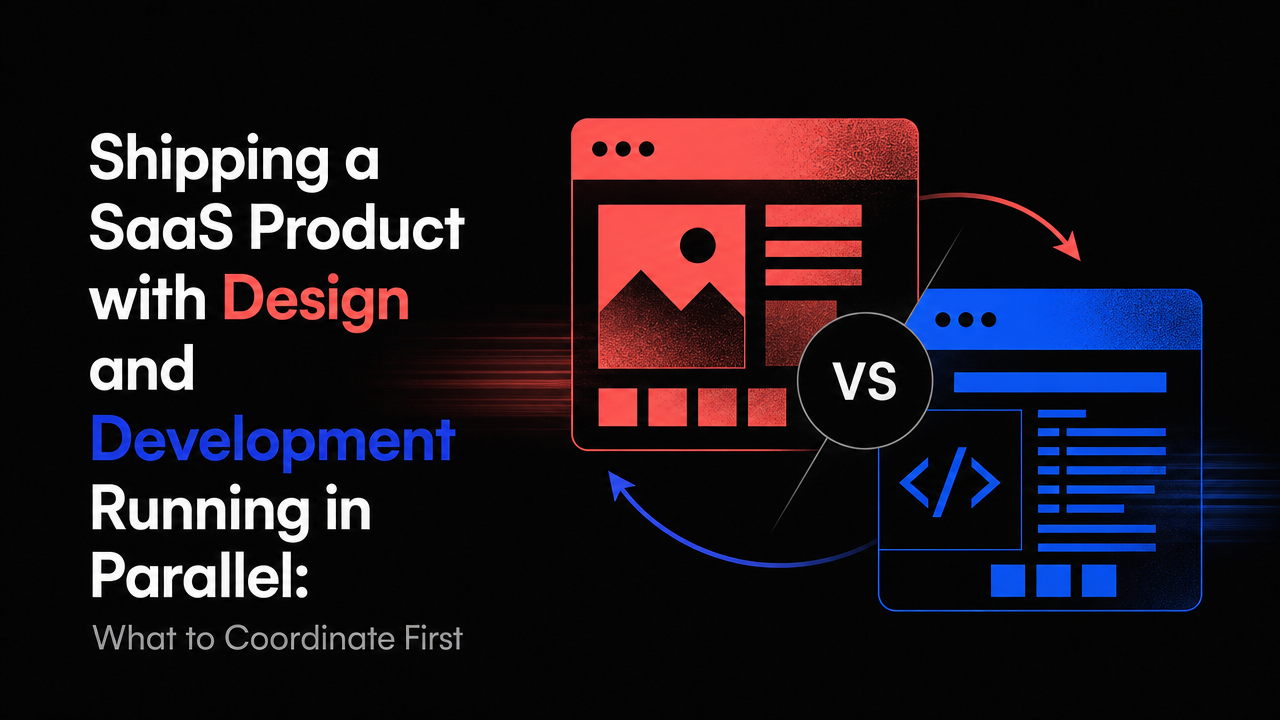
Shipping a SaaS Product with Design and Development Running in Parallel: What to Coordinate First
The Parallel Development Problem
Early-stage SaaS founders often face a false choice: wait for design to finish before developers start, or let them work independently and hope it aligns at the end. The first costs weeks you don't have; the second typically costs thousands in rework and scope creep.
Design and development can run in parallel—but only if you coordinate the right things first. The Small Square works with teams under 20 people who need to move fast without creating a design-development bottleneck, and the pattern is consistent: founders who lock down the core decisions upfront ship 40% faster than those who let these decisions slip into sprint work.
What Must Be Decided Before Parallel Work Starts
1. Core User Flows and MVP Boundaries
Before a single designer makes a mockup or a developer touches code, you need one document: the feature list for launch. This is not a 50-page spec—it's a prioritized list of the core jobs users need to do, in order, and which ones make the MVP.
If design and development disagree about what "launch" means, one will build something the other can't ship. The Small Square typically frames this as: what three core workflows define your product? Design focuses on making those frictionless; development estimates and builds them. Everything else waits.
2. Data Model and Authentication
This is where most early-stage teams stumble. Developers need to know: how will users sign up? Will you use OAuth or email/password? How much data do you need to store upfront, and how will it scale?
Designers need to know the same thing because it shapes the onboarding flow, navigation structure, and account management interface. If development locks in a data model that requires five signup steps and design has mocked one-step onboarding, you have a collision.
Spend one hour together—founder, lead designer, lead developer—agreeing on the database shape and auth flow. Document it as a diagram. This one decision prevents weeks of friction.
3. Platform(s) and Tech Stack
Are you building web-only, mobile, or both? If both, are they native apps or web-responsive? Will you use a webflow development agency approach for rapid iteration, or custom code for full control?
Designers need this because it shapes their design system constraints and component library. Developers need it because it determines how they structure the frontend and backend. A designer building for iOS and a developer building for React Web will create incompatible interfaces.
4. Design System Foundations
You don't need a complete design system before work starts. But you do need: a color palette, typography scale, spacing grid, and core component definitions (button, input, card, modal). This takes one day for a focused team and saves teams weeks of inconsistency.
The goal is not perfection—it's consistency. Developers can build form components to a spec; designers can iterate on detail within that frame. A shared component library, even a rough one, means developers and designers are speaking the same language.
How to Run Design and Development in Parallel
Stagger Work by Feature Layer
Once foundations are locked, design can lead by one sprint. Design the core user flow (signup → dashboard → first action), then hand it to developers. While developers build that, designers are detailing the next feature layer.
This creates a natural handoff rhythm: design is always 1–2 weeks ahead, developers have something concrete to build against, and both teams can iterate without blocking each other.
Weekly Design-Dev Sync (30 Minutes)
Every Monday or Wednesday, design and development spend 30 minutes on screen together. The goal: identify any misalignments before they become rework. Does the design assume a feature the backend can't deliver by the deadline? Does the developer's implementation require UX changes?
Catching this early, when it's a conversation, costs nothing. Catching it after one team has shipped costs days of rework.
Shared Component Ownership
Assign one person (often the lead developer or design lead) as the "component keeper"—responsible for maintaining the shared component library and ensuring both teams add to it, not around it. This prevents design from shipping custom buttons in one corner and code from shipping a different pattern elsewhere.
Why This Matters for Early-Stage SaaS
A 20-person SaaS team shipping quickly doesn't have the luxury of sequential design-then-build workflows. You also can't afford the chaos of zero coordination. The teams that ship products that sell themselves—and that investors and users take seriously—are the ones where design and development trust each other enough to run in parallel, but disciplined enough to coordinate the foundations.
Tools like framer website development company approaches or rapid prototyping in no-code can accelerate this further, letting designers and developers iterate together in the same environment. But even with excellent tools, clarity on user flows, data structure, and design system rules is what separates a shipped product from six months of scope creep.
The Small Square Approach
When The Small Square partners with early-stage B2B SaaS founders, this coordination happens upfront—before design mockups or code. The team spends the first week locking down the MVP feature list, auth model, platform choice, and design foundations. Then design and development run in parallel with weekly check-ins, and handoffs happen feature-by-feature rather than all-at-once.
This is especially critical for teams using saas website development services that span custom and no-code work. Clarity upfront means no surprises about what each tool can do and how they integrate.
Conclusion: Coordinate Foundations, Free the Teams
Parallel design and development isn't chaos if you lock down five decisions first: MVP scope, data model, platform choice, tech stack, and design system rules. Once those are solid, designers and developers can move fast independently, with a weekly sync to catch misalignments before they become expensive.
The result: a shipped product, not a half-finished initiative buried in scope creep. For early-stage founders under pressure to launch, that coordination pays for itself in weeks saved.



Accepted Payments

