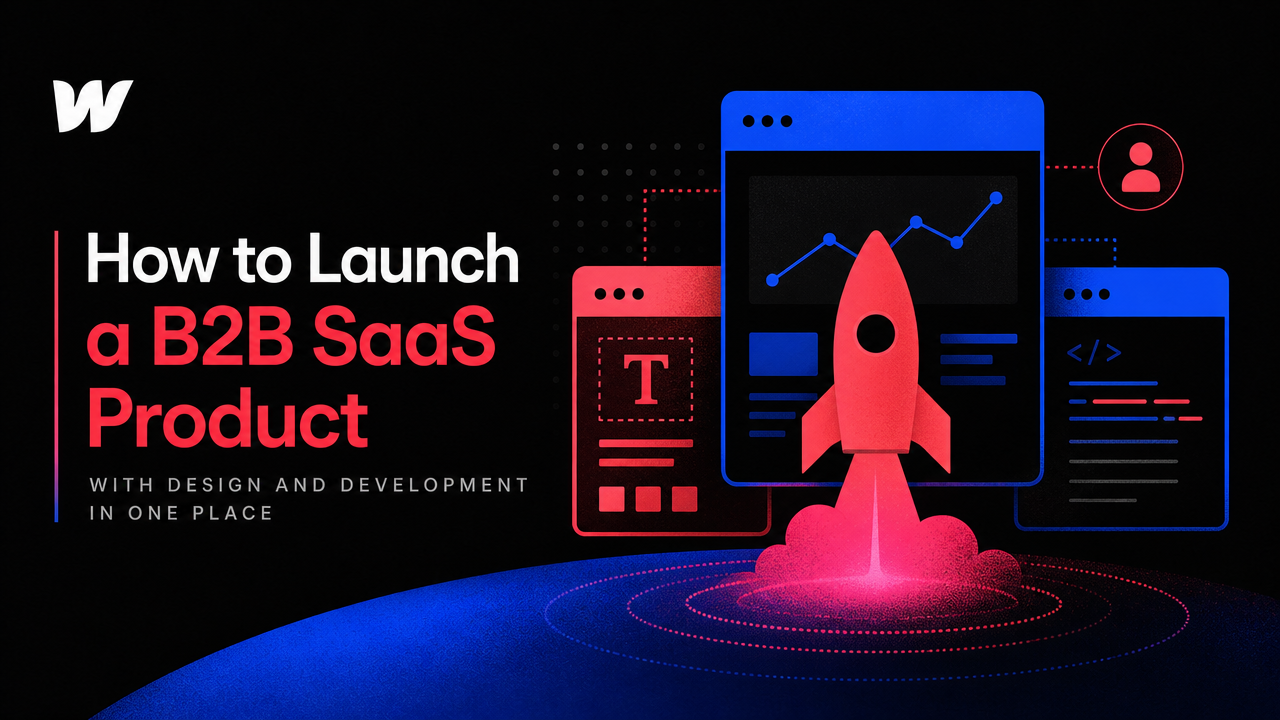
How to Launch a B2B SaaS Product with Design and Development in One Place
The Bottleneck Every Early-Stage SaaS Founder Hits
Most early-stage SaaS founders start by hiring a designer, then a developer, then a freelancer for the landing page. Within weeks, they have six different people using six different tools, speaking six different languages about what "the product" actually is. By the time the first version launches, design intent has been lost in translation, the codebase doesn't match the Figma file, and the product doesn't sell itself—it barely sells at all.
This fragmentation costs time and money. It also costs clarity. When design and development live in separate worlds, the product that ships is rarely what was imagined.
A unified approach—where design and development live together from day one—cuts through this noise. The Small Square specializes in exactly this workflow for early-stage B2B SaaS companies. With teams under 20 people, you don't need separate agencies for design, frontend, backend, and mobile. You need one partner who speaks both languages fluently and ships cohesive products that actually work.
What a Unified Design-to-Development Process Looks Like
When design and development are integrated from the start, the workflow changes fundamentally.
Week 1–2: Design Lock. Designers and developers sit in the same room (or video call) to agree on the product's core flows, information architecture, and user interactions. Developers flag feasibility issues before design gets too far. Designers push back on janky solutions. The result is a shared understanding that doesn't need to be translated later.
Week 3–4: Build to Design. Development starts from a locked design system, not a Figma file that drifts. Using tools like framer website development company or webflow development agency solutions, designers and developers collaborate on interactive prototypes that are closer to the final product. This cuts the "build–redesign–rebuild" loop.
Week 5+: Iterate in Place. Changes don't require a design-to-development game of telephone. A designer adjusts spacing in the component library; the developer updates it once, everywhere. User feedback gets turned into a change that reflects the original intent, not a workaround.
This isn't just faster. It's more honest. The product that ships looks and feels like what was designed because the design was built with implementation in mind from the start.
The Real Cost of Separation
When design and development split, the hidden costs add up fast:
- Rework time: Designers create work that developers can't build within the budget or timeline. Design gets diluted. No one wins.
- Communication overhead: Every change requires email, Slack, a call, and a follow-up. A 10-minute clarification becomes a 2-day delay.
- Design drift: By launch, the product looks different from the design because the developer chose expedient shortcuts. The designer doesn't see it until launch. Too late to fix.
- Platform misalignment: The website is beautiful but the app is clunky. Or the app was built first and the website doesn't match the product's actual flows. Users get confused.
For a bootstrapped founder with a 40-hour runway, these costs are lethal. They're also preventable.
When to Go with One Partner Instead of Multiple
You should consolidate with a single partner if you are:
- Launching your first B2B SaaS product and need a cohesive web and mobile presence
- Under 20 people and can't afford the communication tax of managing multiple vendors
- Pre-product-market fit and need to iterate fast—design and code need to move together
- Building on scalable infrastructure from day one (no redesign after 100 users)
- Bootstrapped or early-stage raised and need transparent, fixed-scope work
You might split services if you need highly specialized expertise in a narrow domain (fintech compliance, real-time data visualization) that a general SaaS partner won't have. But for the core product—the thing that sells—unified design and development is the move.
What "Unified" Actually Means in Practice
Unified doesn't mean one person doing everything poorly. It means a team where designers write HTML (or work in no-code), developers understand design intent, and the process is built for back-and-forth, not handoffs.
For SaaS companies, this often looks like:
- Design systems built in code: Colors, typography, components live in a single source of truth that both design and dev pull from. Changes propagate everywhere automatically.
- No-code or low-code for speed: Webflow and Framer allow designers and developers to collaborate on the same file—or at least the same tool—without context switching. This is why saas website development has shifted toward these tools for early-stage products.
- Shared ownership of the product: The designer doesn't disappear after handing off the design. The developer doesn't ignore design decisions to ship faster. Both are accountable for what ships.
- Scheduled review loops: Instead of async chaos, design and dev sync once or twice a week to catch drift early. It's predictable and prevents surprises at launch.
This structure works because the goal is clear: ship a product that sells itself, not a perfect design or a perfect codebase. Compromise is baked in—and that's actually a strength for an early-stage company.
The Outcome: Products That Actually Sell
When design and development are unified, founders report several changes:
- Launch timelines shrink—often by 30–40% because there's no rework phase
- User feedback is easier to implement because the team already speaks the same language
- The product feels intentional across platforms because it was designed and built with the same constraints in mind
- Scaling the product later is faster because the foundation was built for growth, not sprints
These aren't guarantees. They're outcomes of a process that eliminates waste—the waste of translation, rework, and misalignment.
Conclusion: Design and Development Are One Job Now
For early-stage SaaS, the old model of separating design and development is a luxury tax. You pay extra money, extra time, and extra confusion to have two teams who don't talk. That worked when projects were waterfall and budgets were huge. It doesn't work now.
A unified approach—design, development, and product thinking all in one place—is faster, clearer, and more honest about what a startup needs to ship. If you're an early-stage founder deciding whether to hire separate agencies or find one partner who does both, the unified path wins almost every time. The product that ships will sell better, the team will move faster, and you'll actually know what you're building before you launch it.
The Small Square brings design and development together for B2B SaaS founders shipping their first product.



Accepted Payments

