How to Keep Design and Development Aligned When Building a SaaS MVP
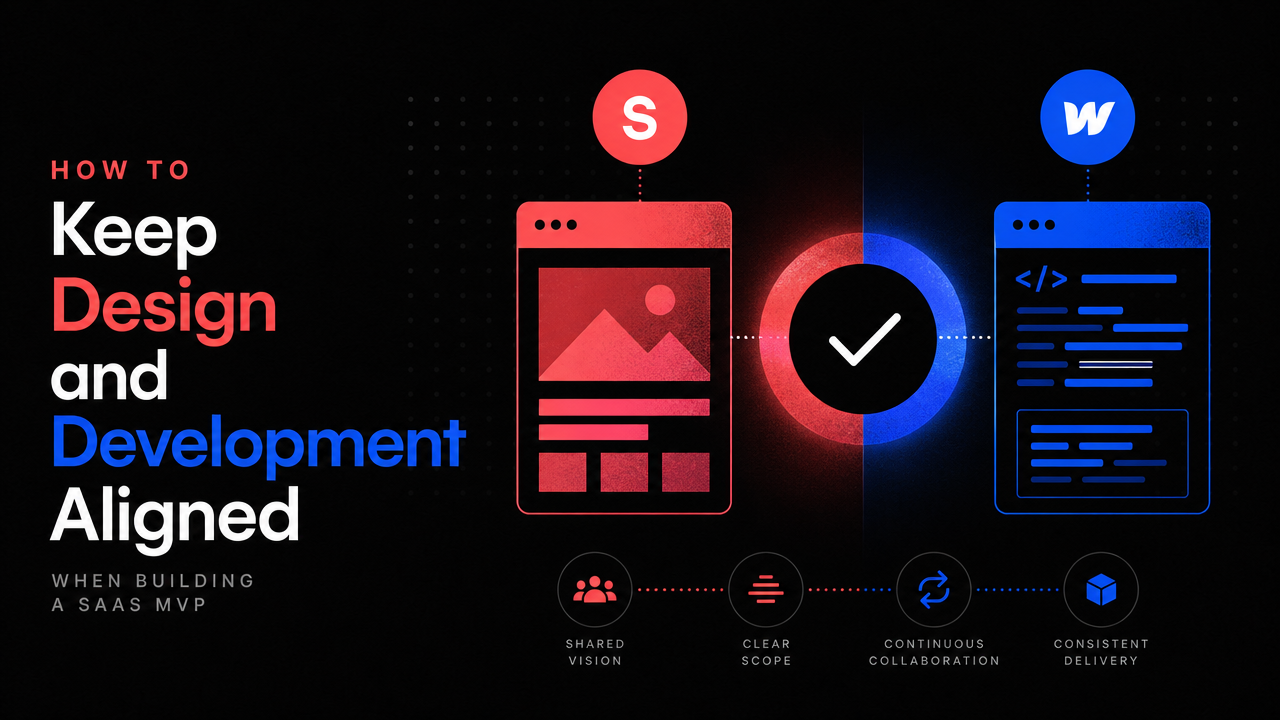
Design and development misalignment destroys SaaS MVPs before they ship.
When designers hand off mockups and developers interpret them differently, you lose weeks. When feature scope changes mid-sprint and design doesn't know until deployment, your product looks fractured. When one team optimizes for aesthetics and the other prioritizes speed, users experience a disconnect between what they see and what actually works.
The gap between design intent and development reality is where early-stage SaaS products stall. This is not about conflict—it is about two different workflows, vocabularies, and priorities colliding. A designer thinking in user flows and visual hierarchy is operating on a different timeline than a developer managing technical debt and database architecture. Close that gap early, and your MVP ships faster and more cohesive. Let it widen, and you rebuild features twice.
What alignment actually looks like
True design-development alignment means both teams shape the product simultaneously, not sequentially. It is not designers finishing mockups and then developers building what they see. It is not developers shipping a feature and designers polishing it afterward.
Aligned teams define constraints together at the start. Developers explain what is technically feasible within the timeline and budget. Designers work within those constraints creatively, rather than designing freely and asking developers to make it happen. This is faster than either team working alone, because nobody is building the wrong thing.
A concrete example: An early-stage B2B SaaS founder needs a dashboard MVP in eight weeks. An unaligned approach: designer spends three weeks on high-fidelity mockups of every state and interaction, then hands them to developers who realize some interactions require backend work that does not exist yet, so they simplify the UI without consulting the designer. Result: the product ships, but the user experience feels patchwork because design and development made separate decisions.
An aligned approach: designer and developers start a single kickoff where developers outline what data is available, what integrations are ready, and what UI patterns are already built. Designer sketches the dashboard in those constraints. Over two weeks, they iterate together—designer proposes a filter interaction, developers ask if it requires a new API endpoint, designer adjusts. When development starts, there are no surprises. The product ships faster because the design is buildable and the build respects the design intent.
Four mechanics that keep teams synchronized
Shared design systems and component libraries
A design system is not a nice-to-have for mature companies. It is a alignment tool for early-stage teams. When both designer and developer work from the same button, input, and card components, they stop debating what a form should look like. The system enforces consistency without requiring a conversation every time.
No-code tools like Webflow and Framer make this easier for SaaS frontend work. A webflow development agency can build a reusable component library directly in the tool, so design and code are the same thing—not separate artifacts that drift apart. Designers can iterate on components and developers see the changes immediately because they are working in the same environment.
Design in code, or code in design
The old model was design → hand-off → development. Modern alignment collapses that hand-off. Design and development happen in the same tool or environment.
If your SaaS uses a framer website development company for the frontend, the designer is already working with real components and real constraints. They are not designing in Figma and hoping it builds the same way. If your team uses a component library in your codebase, designers can view it, comment on it, and iterate on it without asking a developer to make changes in a separate tool.
The closer design and development work in the same space, the fewer translation errors happen.
Weekly syncs on scope and feasibility
Early-stage MVPs change. A founder realizes a feature is more valuable than expected, or market feedback suggests a different priority. When design and development are aligned, scope changes do not cause rework—they cause conversation.
A 30-minute weekly sync where the designer and lead developer walk through the roadmap together prevents misalignment before it happens. Developer: "This report feature will take longer than we planned because we need to build an export function." Designer: "Okay, let me simplify the report UI and we delay the export to v1.1." No surprises at launch day. Both teams know what they are building and why.
Handoff rituals that include acceptance criteria
When design hands off a feature to development, use a checklist, not a folder of images. Acceptance criteria should include design intent: "This button should feel pressable and confirm the action is destructive" is more useful than "Make it red." Developers then build to intent, not to pixel-perfection.
The flip side: when development ships a feature, designers review it against those same criteria before it ships to users. This is not about polish—it is about catching misinterpretations while they are still cheap to fix.
How saas website development firms embed alignment into the process
Services focused on B2B SaaS startups build alignment into their workflow by default. A team with 14+ years of experience shipping SaaS products knows the misalignments that kill early-stage companies, and they structure sprints to avoid them.
This means designers and developers are not siloed by role—they work on the same product roadmap, review the same metrics, and own the same launch date. It means mockups are tested in working code before they are considered final. It means the team is small enough (typically under 20 people total, including the founder) that decisions are made face-to-face, not through email trails and Slack threads.
For early-stage founders without an in-house design team, this embedded alignment is often easier to get from a specialized partner than trying to hire a designer and developer and manage the relationship yourself.
The compound effect of staying aligned
Every week design and development stay synchronized, your MVP moves closer to launch without rework. The first sprint might take the same time as an unaligned team—you are doing the same work. By sprint three or four, alignment saves you a half-sprint of rework, and by launch, you have shipped two weeks faster because you never had to re-design a feature mid-build or ask developers to rebuild something the designer did not understand.
Alignment is not a policy you enforce—it is a structure you build into how the team works. Define it at the start, revisit it weekly, and watch your MVP ship with cohesion and speed. That is the difference between an MVP that ships and an MVP that sells.



Accepted Payments

