How to Choose Between Webflow and Framer for Your SaaS Website
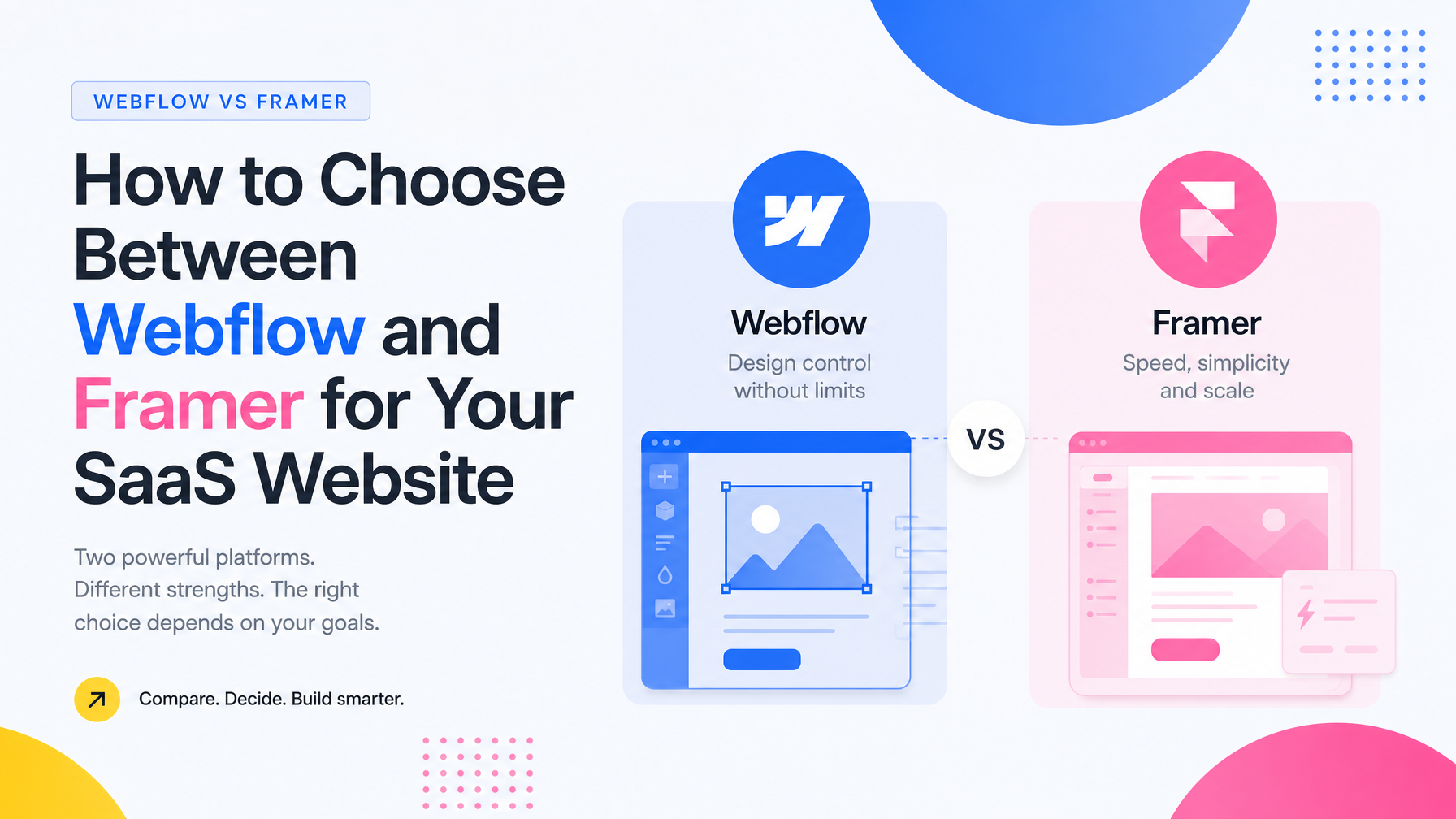
Webflow vs Framer: Which Platform Actually Works for SaaS Founders
Both Webflow and Framer promise to let founders build production-ready websites without hiring a dev team. But they solve different problems, and picking the wrong one wastes months and money. The choice comes down to what you're optimizing for: visual design freedom and brand control, or speed and AI-assisted workflow.
Webflow is a full-stack website builder with CMS and ecommerce built in. Framer is a React-based design and prototyping tool optimized for converting Figma designs into coded, interactive websites at speed. Neither is wrong—but they'll produce different results depending on your SaaS stage, team, and timeline.
Webflow: Maximum Control, Steep Learning Curve
Webflow gives you pixel-perfect visual control. You design in the browser, it generates clean HTML/CSS/JS, and you own the output. That matters for founders who want a website that looks exactly like their brand, not like every other Webflow site on the internet.
The trade-off is time. Learning Webflow's canvas, interactions panel, and CMS logic takes weeks—even for designers. Building a complex SaaS homepage (hero, pricing, comparison tables, testimonials, CTAs) typically takes 2–4 weeks solo, or 1–2 weeks with a dedicated Webflow specialist. Hosting is managed, but costs scale: $12/month for basic sites to $300+/month for advanced CMS and ecommerce features.
Webflow shines for:
- Marketing-heavy sites that need custom animations and conditional interactions
- Products with dynamic pricing or case study showcases
- Founders who want to own their codebase long-term
- Sites that need SEO-native structures (clean HTML, easy canonical tags, full meta control)
Where it struggles: Webflow has a learning curve that doesn't pay off if you're building a simple 5-page site. Its CMS is powerful but not as intuitive as WordPress. And if you later need custom backend logic—webhooks, third-party integrations beyond Zapier, or real-time data—you'll hit Webflow's limits and wish you'd hired a developer instead.
Framer: Design-to-Code in Days, Less Flexibility Later
Framer starts where most founders already work: Figma. You design your site in Figma, sync it to Framer, and it auto-generates React components. You add interactivity (animations, form logic, conditional rendering) in Framer's visual editor or by writing TypeScript. Deploy to Vercel with one click.
Speed is the superpower. A fully designed SaaS landing page goes from Figma to live in 3–5 days, not 2 weeks. You can iterate on copy, hero imagery, and button labels without re-designing in code. And if you're hiring a dev later, they get clean React components—no Webflow vendor lock-in.
Framer works best for:
- Early-stage SaaS founders launching an MVP homepage fast
- Product-led growth companies where the site is a conversion funnel, not a content hub
- Teams that already use Figma (no new tool to learn)
- Campaigns or landing pages that need A/B testing and rapid iteration
The catch: Framer is designed for marketing sites and simple product demos, not for complex dashboards, multi-page apps, or content-heavy products. Once you need a real CMS (50+ blog posts, dynamic product pages, user-generated content), Framer falls short. And if your designer isn't comfortable in Figma, or you're not ready to work in design-first workflows, Framer adds friction instead of removing it.
The Real Comparison: Timeline vs Control
Use Webflow development if you want a polished, owner-built website that can evolve without a developer. You'll spend more time upfront, but you get a platform that grows with your product. If you're not hiring a design agency, Webflow is the safer bet.
Use Framer if your timeline is tight (4–6 weeks to launch), your site is primarily a marketing tool, and you either have a strong design team or plan to hire an agency to handle the design → code handoff. Custom Framer website development lets agencies turn Figma files into live sites in a fraction of traditional dev time.
How The Small Square Approaches Both
Early-stage SaaS founders we work with often ask which to pick. We recommend starting with your constraints: timeline, budget, and long-term product vision. If you're bootstrapped and have 8 weeks to launch, Webflow. If you're venture-backed, launching in 3 weeks, and plan to hire a full dev team in 6 months, Framer makes sense—we can hand off clean React components and documentation.
We've built SaaS websites on both platforms. On Webflow, we've designed sites for complex products (dashboards, role-based access, multi-step workflows) using custom interactions and nested CMS structures. On Framer, we've shipped high-converting landing pages and product showcases in under two weeks, with the design staying linked to Figma for fast revisions.
The right choice depends on what you're building and when you need to launch. Neither platform will fail you—but picking the wrong one costs you 3–4 weeks or forces you to rebuild later when your needs change.
For founders ready to build faster and own more of the process, we offer both webflow development agency services and Framer-first workflows. The decision usually comes down to this: do you want a website that lasts five years, or one that proves product-market fit in three months? Both are valid. We'll help you pick based on your actual situation, not marketing hype.
If you're also planning backend APIs, database design, or integrations with your core product, consider SaaS development services that pair a modern frontend framework with a full-stack approach—that's where many founders end up once their MVP site gets traction.



Accepted Payments

