How Product Design and Development Teams Should Communicate Across Silos
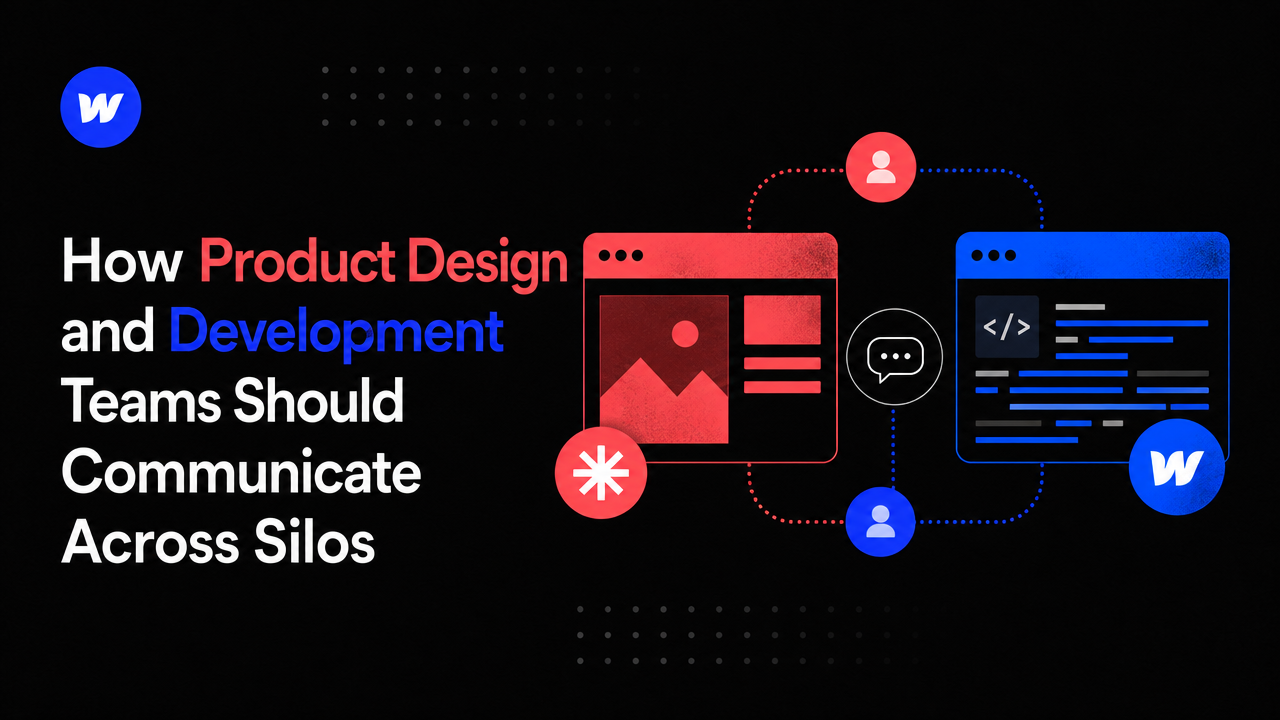
The Alignment Problem That Costs Early-Stage SaaS Founders Weeks
Design and development teams that don't communicate clearly waste time rebuilding work, miss launch windows, and ship products users don't want. When a designer hands off mockups without explaining intent, or engineers build features without design input, the result is rework at the worst possible moment—right before launch.
This gap widens fastest in small teams under 20 people, where a single miscommunication can derail momentum. Early-stage SaaS founders often juggle multiple agencies or freelancers, each working in isolation, which compounds the problem. A cohesive product design and development process requires shared vocabulary, regular touchpoints, and systems that keep both sides synchronized from sprint one.
Why This Problem Exists—and How to Spot It Early
Design-dev silos form predictably. A designer creates flows and high-fidelity mockups based on user research and competitive analysis. An engineer builds what they think those designs require, but interprets details differently or discovers constraints the designer didn't know about. By the time they sync, weeks of parallel work diverge.
Common signals that alignment is breaking:
- Engineers ask "Why does this need three buttons?" after implementation starts
- Designers discover mid-build that a planned interaction isn't technically feasible
- The final product looks different from mockups because decisions changed without design sign-off
- Launch delays because finishing touches require unexpected back-and-forth
- Users test the product and find flows no one intended
These aren't personality conflicts—they're process failures. Designers and engineers have different constraints (visual hierarchy vs. technical feasibility), different vocabularies (components vs. modules), and different success metrics (aesthetics vs. performance). Without bridging those gaps early, they work toward different products.
The Communication System That Prevents Rework
Shared alignment starts with clarity on three things: what the product solves, what the constraints are, and who decides what when.
Define the problem before designing or building. Before mockups or code, design and engineering should agree on the job-to-be-done—what outcome the feature delivers for the user. This sounds obvious; most teams skip it. A shared one-page brief, written together, prevents the divergence that happens when they interpret the goal differently.
Make constraints visible early. Engineers should review design concepts before they're detailed. Not to critique aesthetics, but to surface blockers: "We can't sync data that fast," or "That interaction requires real-time WebSocket support." Designers need to know this in the concept stage, not after building mockups. This is also when a framer website development company or development partner can shape thinking: prototyping in framer website development allows designers and engineers to validate interactions together before committing to a direction.
Agree on the design system once, not per feature. If every button, input, or modal is negotiated individually, you'll repeat alignment conversations endlessly. A shared design system—even a lightweight one—means design and dev speak the same language about spacing, type scale, states, and behavior. Both sides reference one source of truth.
Use asynchronous documentation. Real-time sync meetings are important, but most decisions should be documented—not just discussed. A design spec that explains not just what a component looks like, but why, and what states it has, reduces the chance an engineer will build something that looks right but behaves wrong. Figma comments, Slack threads, or a shared spec doc work; the format matters less than consistency.
How Handoff Cadence Affects Launch Speed
The timing of design-to-dev handoff shapes the whole project. Three common patterns:
Waterfall (design first, then dev): Design completes mockups, then hands off to engineering. This feels organized but creates long waits—design finishes before dev starts, so engineers have time to ask questions but no designer bandwidth. It also means design discoveries that emerge during build don't get integrated; there's no feedback loop.
Agile (concurrent, frequent sync): Design and dev work in parallel on small pieces—a single user flow, a feature set, a week's work. They sync daily or every few days. This catches misalignment fast but requires more meeting overhead and both teams committed to the same rhythm.
Integrated (one cohesive team): A partner like The Small Square that handles both design and development from day one brings design and engineering into the same room from the start. There's no handoff because there's no seam; constraints and possibilities are baked into the design from the beginning, and the product ships faster because decisions aren't renegotiated at the implementation stage.
For early-stage teams building a webflow development agency partner or custom platform, the integrated model often reduces total timeline. Webflow development paired with concurrent design work means mockups and code stay in sync—no design-to-dev translation layer, no rework.
Specific Practices That Work
Weekly design-dev syncs with a clear agenda. Not to socialize or align on philosophy, but to surface blockers, review completed work, and make decisions together. Fifteen minutes focused beats an hour of rambling.
A shared Figma or prototype as the source of truth. When design changes, it's visible. When engineering builds, they can comment on the file. This creates an audit trail and prevents email-based miscommunication.
QA that includes design review. When a feature launches, both design and dev should test it. The designer checks that behavior matches intent. The engineer checks that performance is acceptable. A QA checklist that includes both perspectives prevents bugs that either side would miss alone.
Retrospectives that blame the process, not the people. When a feature ships late or rework is needed, ask: "Where did we lose alignment?" Not: "Who caused this?" Process changes prevent repeat incidents; blame shuts down honesty.
Why Unified Product Development Matters for SaaS
B2B SaaS products that sell themselves share one trait: every interaction is intentional. The onboarding flow gets users to value fast. The dashboard is intuitive without being dumbed down. The error states teach, not frustrate. That coherence only happens when design and engineering make decisions together, not in sequence.
When you hire a saas website development partner, you're not just buying implementation. SaaS website development done right means design and dev are one team, solving problems together from discovery through launch. Early-stage founders with small budgets can't afford the hidden cost of alignment failures—missed deadlines, rework cycles, products that launch but don't convert.
The best teams don't have perfect communication. They have systems that catch misalignment early, processes that make rework rare, and the humility to fix what's broken instead of pretending it works. That's what turns a design-dev relationship from a source of friction into one of real speed.



Accepted Payments

