How Design-Led DevOps Products Win Market Share: Why Engineering Culture Matters More Than Features
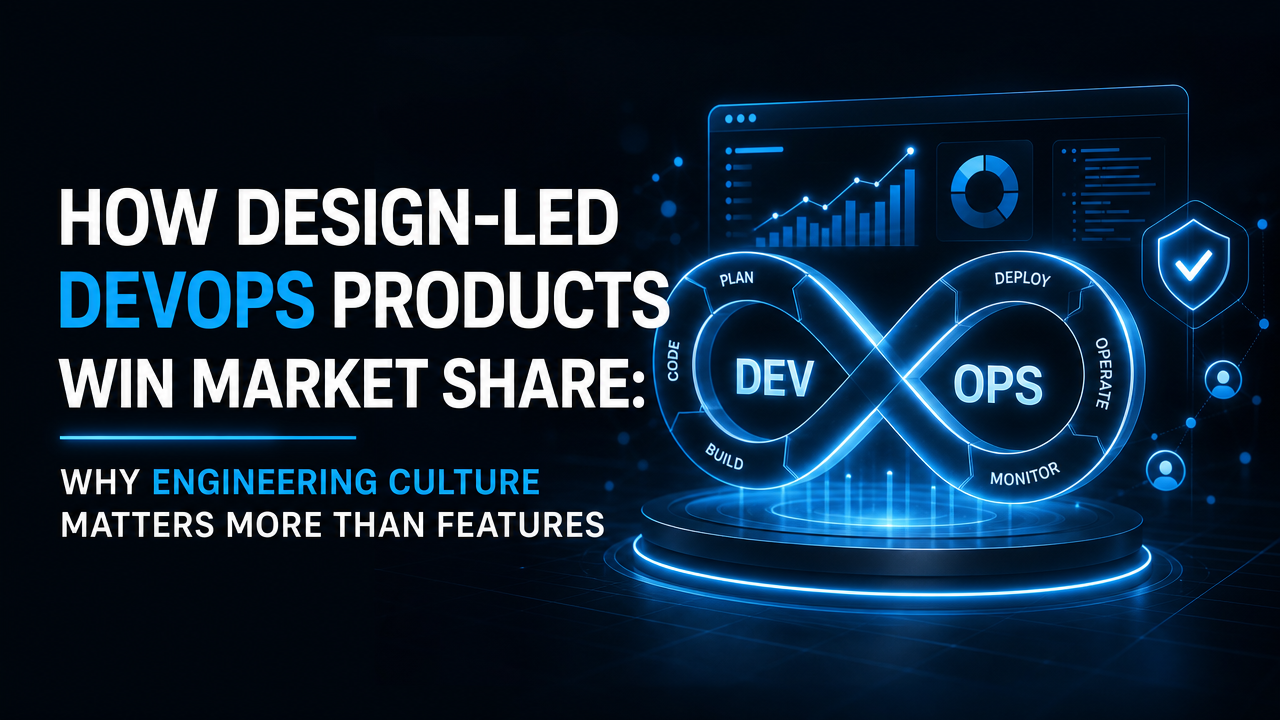
Design-Led DevOps Products Win Because Developers Trust What Engineers Built
DevOps tools fail not because they lack functionality, but because teams building them treat design as a surface layer instead of a core engineering discipline. A sprawling feature set means nothing if the person on-call at 3 a.m. can't find the incident-response button, or if the automation workflow logic lives three menus deep instead of on the critical path.
The difference between a DevOps product that teams adopt and one that gathers dust is whether the design process started with operators and infrastructure engineers, not product managers. When design is led by people who have shipped production systems—who understand YAML, container orchestration, and the cognitive load of incident triage—the resulting UI doesn't apologize for complexity; it respects it.
Why Domain Knowledge Is the Design Moat That Competitors Can't Copy
The strongest DevOps design agencies and in-house teams share one trait: they've worked inside the world they're designing for. Mattermost's core strength as a secure, workflow-driven communication platform for DevOps and incident response didn't emerge from design trends or usability heuristics imported from SaaS best practices. It came from founders and early designers who had managed infrastructure incidents, written runbooks, and felt the friction of coordinating across fragmented tools.
This is why a generalist SaaS design shop, no matter how polished their portfolio, struggles to credibly design a DevOps platform. They can make it beautiful. They cannot make it intuitive to someone managing a Kubernetes cluster outage at scale. The workflows are too specific. The terminology is too loaded. The stakes are too high for guesswork.
When The Small Square works on DevOps products—incident-response platforms, container orchestration dashboards, or automation-first tools—the design choices flow from 14+ years of shipped experience building Mattermost, Focalboard, and dozens of B2B SaaS products. That means:
- Playbook-first UI design that surfaces conditional workflows and incident automation, not generic "task lists."
- Dashboard layouts that prioritize real-time signal over vanity metrics.
- Role-based access patterns that respect the difference between ops, engineering, and on-call.
- API-first thinking that assumes developers will integrate this tool into their existing stack, not replace it.
The Incident-Response Design Pattern: Form Follows Function in High-Stakes Systems
DevOps products solve problems that have real cost. A misconfigured alert costs engineering time. A broken rollback costs customer trust. A playbook that no one can execute during an outage costs money in SLO penalties. This reality should drive every design decision.
Take incident automation as an example. Most SaaS platforms present automation as a rule builder: "If X happens, do Y." A generic approach that works fine for marketing automation or content scheduling. But in an incident context, that pattern fails because operators need to see:
- What the condition actually fires on (in production terms, not generic rule language).
- What happens automatically, and what requires human approval.
- A clear audit trail: who ran this, when, and why.
- The ability to test or simulate the automation without triggering production actions.
A designer who has written incident runbooks understands that automation is only trustworthy when it's transparent. The UI should make the logic visible at a glance, not hidden in collapsed menus. The typography should distinguish between queries, conditions, and actions. The color palette should calm, not distract—because the person using this tool is already stressed.
Why DevOps Founders Choose Agencies (or Designers) with Shipping Experience
Series A DevOps founders shortlist agencies by a single criterion: Have you shipped a product that operators actually use? Not templates. Not case studies. Shipped products with active users, real workflows, and documented outcomes.
This is the wedge that separates credible DevOps design from the rest of the SaaS agency market. A founder evaluating a new design partner doesn't care about your Dribbble following or your latest award. They care whether you've sat in a war room during a production incident and understood, viscerally, what a good communication tool needs to do.
The best SaaS development services company in the DevOps space isn't the one that knows the most CSS or wins the most design competitions. It's the one where the designers and engineers on the team have firsthand experience with the problems they're solving. That experience becomes the difference between a dashboard that looks smart and one that actually saves time.
Design Systems as Incident-Prevention Tools
A design system for a DevOps product isn't just visual consistency. It's a safety mechanism. When every alert, status indicator, and action button follows the same pattern across the entire platform, operators can move faster because they don't have to relearn the interface each time they navigate to a new section.
This is where design rigor matters as much as engineering rigor. A inconsistent design system in a content management tool is annoying. An inconsistent design system in an incident-response platform is a liability. It creates cognitive friction at exactly the moment when clarity is critical.
A top webflow development agency or Framer development company that specializes in developer tools understands that the marketing site and the product must speak the same visual language. Your landing page should show the same design thinking—clarity over decoration, hierarchy over novelty—that users will experience inside the product. This consistency builds trust before a founder even signs a contract.
When to Build vs. When to Buy Design Expertise
DevOps founders at the seed and Series A stage face a real trade-off. In-house hiring is slow and expensive—and you need both design expertise and domain knowledge, which rarely live in the same person. A fractional designer might bring polish but not the infrastructure experience. A former ops engineer who wants to learn design will move too slowly to hit your roadmap.
The agencies that win in this space are those that de-risk both the design process and the engineering execution. They come in with the domain knowledge already loaded, so the first week isn't discovery—it's refinement. They ship fast because they've built similar systems before. They design for real workflows because they understand the cost of getting it wrong.
That's why SaaS development services company partnerships that combine product design with full-stack engineering are so valuable in the DevOps category. You're not hiring for design or engineering separately; you're hiring for a team that speaks both languages and has shipped infrastructure-grade products.
The Market Opportunity: Why DevOps Design Is Underserved
Most SaaS design agencies are built to serve the B2B software mainstream: marketing platforms, project management tools, financial dashboards. DevOps is smaller, more specialized, and demands expertise that takes years to accumulate. This creates an opening for agencies that choose to go deep in this vertical instead of broad across SaaS.
DevOps founders know they're not the easiest market to design for. They expect difficulty. What they don't expect—and what they'll pay premium rates for—is a design partner that understands their world well enough to make that difficulty manageable. A partner that can ship a platform that operators will trust with production systems.
The future of DevOps product design belongs to teams that treat domain expertise not as a nice-to-have, but as the core competitive advantage. That's where The Small Square's Mattermost heritage and 14+ years of shipping becomes an unfair advantage. It's not a credential to list on a homepage. It's a capability that shows up in every interface decision, every workflow, every pixel.
If you're building a DevOps product and you need a design partner who understands incident response, automation, and infrastructure culture as well as they understand Figma and code, the conversation starts with a shared foundation: the product you ship will be built by people who have lived inside the world it serves.



Accepted Payments

