Boost SaaS Conversions with AI Personalization & Automated Funnels
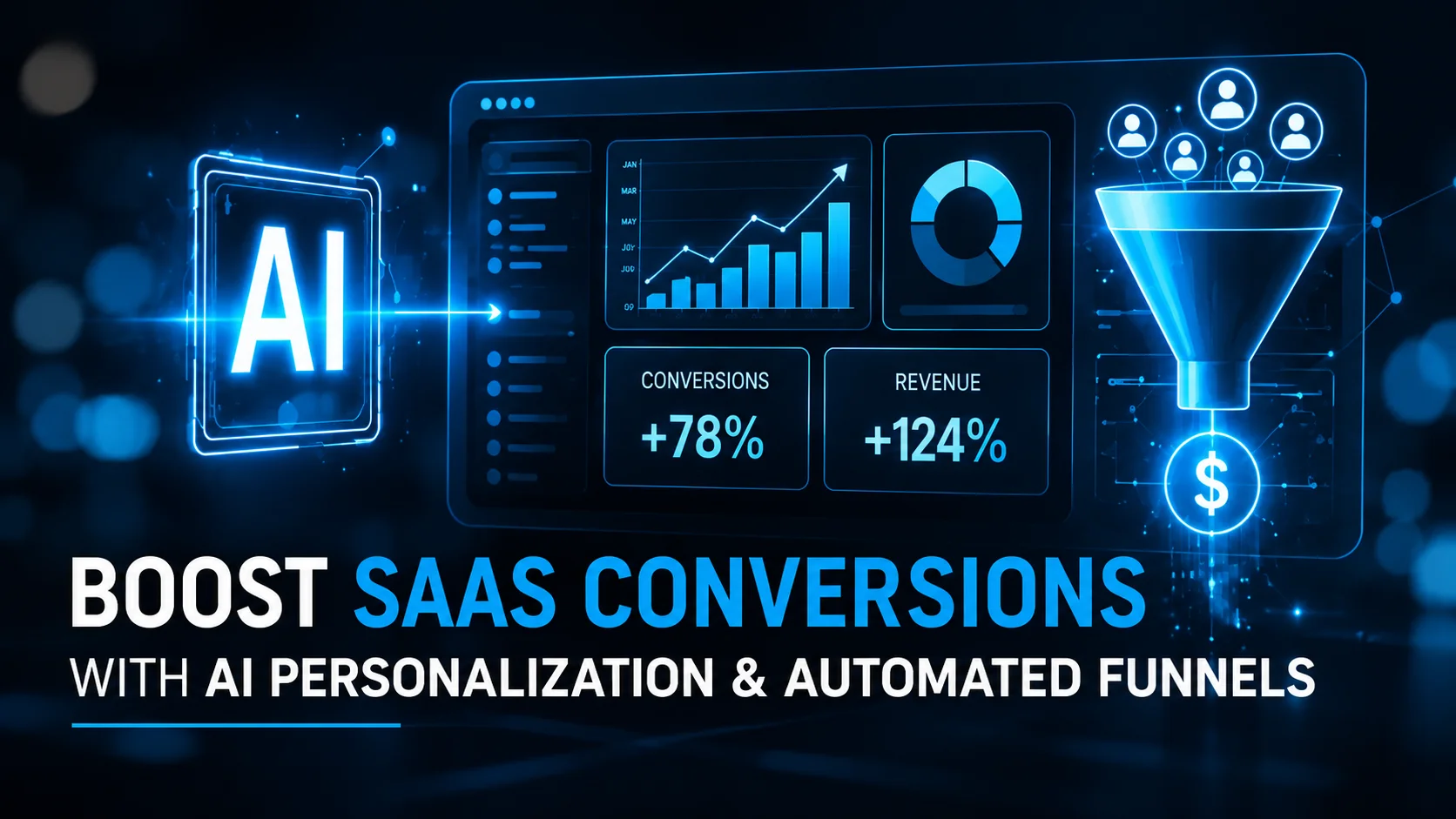
Most SaaS businesses struggle to convert traffic into paying customers even after investing heavily in ads and design. The issue is rarely traffic—it’s alignment. When the message on your ad doesn’t fully match the experience on your website, users drop off quickly.
Modern product teams working with saas design trends 2026 often solve this by combining design thinking with conversion-focused SaaS systems that guide users smoothly from click to signup.
Instead of showing the same message to every visitor, successful SaaS brands now use personalization and automation to increase relevance and conversions.
Why SaaS Websites Fail to Convert

Most SaaS funnels break at one simple point: mismatch between intent and message.
For example:
- A user clicks an ad for “real estate CRM software”
- They land on a generic SaaS homepage
- Nothing feels directly relevant
- They leave within seconds
Even strong products lose conversions because users don’t immediately feel understood.
This is where specialized teams like saas product development agency focus on aligning design, messaging, and user intent to improve performance.
What AI Personalization Actually Means

AI personalization is not just adding a user’s name on a page. It means the entire website experience changes based on who is visiting.
This includes:
- Headlines that match user industry
- Features shown based on user intent
- Case studies relevant to their niche
- CTAs that reflect their stage in the funnel
Instead of building 10 different landing pages, you build one intelligent system that adapts in real time.
This approach is now a core part of modern SaaS growth strategies and is widely used in advanced saas website design services workflows.
How Automated Funnels Improve Conversions
AI personalization becomes even more powerful when paired with automated funnels.
A modern funnel works like this:
- User clicks an ad
- Lands on a personalized page
- Takes action (signup, demo, or click)
- Enters automated email + retargeting flow
- Receives tailored follow-ups based on behavior
Instead of a fixed journey, every user gets a unique path based on their actions.
This removes friction and keeps users engaged at every stage.
Real-World SaaS Example
Let’s say you have a SaaS tool for multiple industries:
- Agencies
- E-commerce stores
- Real estate businesses
Traditional approach:
- One landing page for all users
- Generic messaging for everyone
Smart approach:
- One dynamic landing page
- Different messaging based on traffic source
Example:
- Agencies see productivity-focused messaging
- E-commerce users see revenue-focused messaging
- Real estate users see listing automation features
This is exactly how modern saas web designer teams build high-converting SaaS interfaces that feel personalized without increasing complexity.
Why This Strategy Works So Well
AI personalization and automated funnels improve conversions because they solve three core problems:
1. Relevance
Users immediately see content that matches their intent.
2. Trust
When messaging feels specific, users trust the product faster.
3. Efficiency
One system replaces multiple landing pages and manual experiments.
Instead of guessing what works, you let data and behavior guide the experience.
How to Start Implementing It
You don’t need a full rebuild to get started. A simple approach is enough:
- Identify your top user segments
- Create messaging variations for each segment
- Use URL parameters to detect traffic source
- Personalize headlines and CTAs
- Connect automated email sequences
- Track conversions and refine over time
Small improvements in message alignment often lead to noticeable increases in trial signups.
Final Thoughts
SaaS growth in 2026 is no longer just about driving traffic—it’s about delivering the right message at the right moment. AI personalization and automated funnels help you turn generic traffic into highly qualified users by improving relevance across the entire journey.
Instead of sending everyone to the same page, you build a system that adapts, responds, and converts intelligently.
And when combined with strong product design and strategy from experienced teams like The Small Square, it becomes a powerful engine for scalable SaaS growth.



Accepted Payments

